

BIS Certification for Foreign Manufacturers: How to Prepare for Mandatory Online Filing in 2026
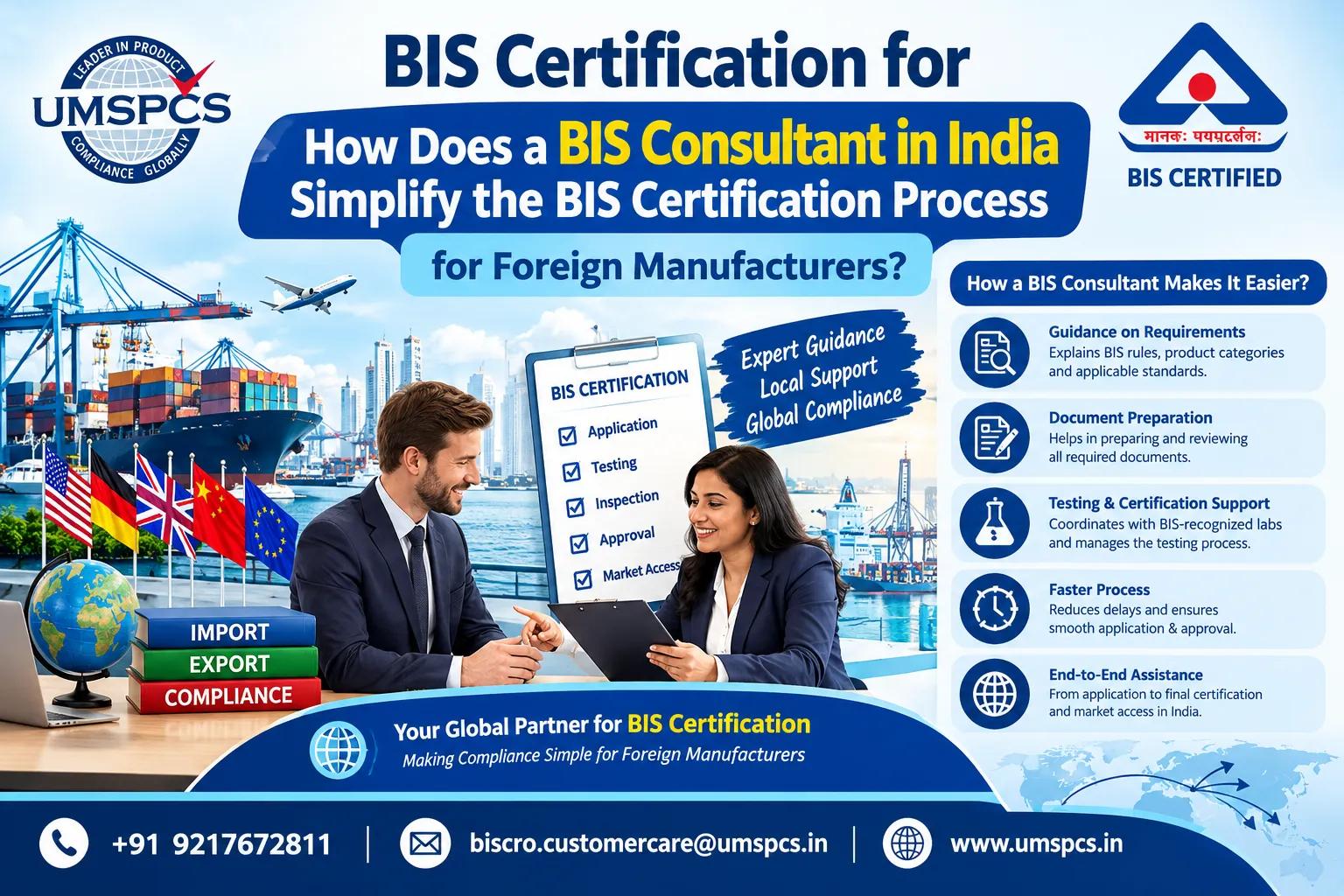
If you make products outside India and sell them into the Indian market, one rule change from 2026 deserves your attention. Since 1 June 2026, new applications under the Foreign Manufacturers Certification Scheme (FMCS) are accepted only through the Manak Online portal. BIS took hard-copy applications until 31 May 2026, and that door is now shut.
At UMSPCS, we have watched plenty of overseas factories get caught out by this. The portal itself is not the hard part. The trouble is that their paperwork was never organised for a digital submission. This guide explains how BIS certification for foreign manufacturers works under the online system and how to get your file ready so it moves smoothly.
What Changed for Overseas Factories
Until recently, a foreign factory could courier signed documents to BIS and wait for a response. That route is closed. Every fresh application for a grant of licence now goes through Manak Online, where you upload documents, pay fees and track progress. BIS has also published a user manual for the FMCS module, and it is worth reading before you touch the portal.
One honest note on the word "deadline": the cut-off date has already passed. For you, the real deadline is the day you want to start selling in India. Anyone shipping covered products needs a licence first, and a half-prepared online file is the quickest way to push that date back.
Who Needs to Pay Attention
The scheme is meant for overseas manufacturers whose products fall under a Quality Control Order (QCO), which means the product must carry the Standard Mark before it can enter India. Steel items, electrical appliances, chemicals and machinery are common examples. Many electronics, such as chargers and certain consumer devices, sit under the Compulsory Registration Scheme, which runs on its own track.
So the first job is simple: confirm which scheme your product belongs to. Mixing this up is one of the most frequent early slips in BIS certification for foreign manufacturers, and it can cost weeks. Also remember that the licence is tied to the actual manufacturing unit, not to a trader or brand owner sitting between the factory and the buyer.
Your Preparation Checklist
Treat the list below as a working document and give each item to a named person on your team.
1. Pin down product scope and the Indian Standard. Identify the QCO, the relevant IS number and the exact models you want covered.
2. Appoint an Authorised Indian Representative (AIR). BIS requires one whichever way you file, and your application will not progress without a valid appointment. Choose someone reachable, since BIS queries land with them first.
3. Verify your factory details. The legal name and the address of the manufacturing unit must match across every document: registration papers, test reports, authorisation letters. Small spelling differences cause large delays.
4. Prepare testing and lab information. Collect test reports, details of your in-house laboratory, and calibration records for the equipment you use.
5. Document your quality control. Keep a process flow, inspection plan and quality manual ready. Inspectors will ask for them later anyway.
6. Sort out signatures early. Declarations and authorisation letters must be signed by the foreign manufacturer. Getting a signatory abroad to sign, scan and return a document takes longer than most people expect.
7. Plan for the technical side of the portal. Scan quality, file size limits and file naming all matter. Register on Manak Online ahead of time and do a dry run of your uploads.
8. Arrange fee payment. Fees are paid online, so confirm your finance team can make an international payment without surprises.
Work through this list and BIS certification for foreign manufacturers becomes a matter of assembling known pieces rather than chasing missing ones.
Mistakes We See Again and Again
Most delays are boring. Names that differ by one letter. Blurry scans. Test reports that cover a different model from the one applied for. Declarations left unsigned. A representative who was appointed on paper but never briefed.
Another quiet problem is timing. Teams file at the last moment and then treat the first BIS query as an emergency. Queries are normal. Build a few weeks of breathing room into your launch plan and they stop being a crisis. In our experience, a smooth BIS certification for foreign manufacturers journey is usually the one where somebody reviewed the file twice before pressing submit.
Where UMSPCS Fits In
UMSPCS works with overseas manufacturers from the first scope check through to filing and follow-up with BIS. We review your documents against what the portal expects, flag mismatches before they turn into queries, and act as the practical link between your factory and the Indian authorities.
If you are comparing consultants for BIS certification for foreign manufacturers, ask each one a direct question: who will actually upload, track and respond on my file? Our team handles BIS certification for foreign manufacturers as a joined-up process, so you are not left piecing together advice from several places.
What Happens After You File
Submission is not the finish line. Expect BIS to review the application, raise queries if anything is unclear, and arrange factory inspection and sample testing. Once those steps are cleared, the licence is granted and you can start marking products with the Standard Mark. After that, surveillance continues, with periodic checks to keep the licence valid.
Planning for these stages from day one is what separates a quick BIS certification for foreign manufacturers project from a slow one. Timelines vary by product and by how fast responses are returned, so we avoid promising fixed numbers.
Read also:How Long Does BIS Certification Take for European Entering India
Frequently Asked Questions
1. Is online filing mandatory for BIS certification for foreign manufacturers? For FMCS applications, yes. From 1 June 2026, grant-of-licence applications under FMCS are processed only when submitted through the Manak Online portal.
2. Can I file from outside India without local help? You can begin the online application from abroad, but an Authorised Indian Representative is needed for the BIS process regardless of whether you file online or offline.
3. What if I sent a hard copy before 31 May 2026? Applications accepted before the cut-off were handled under the earlier route. Any fresh submission or resubmission now goes online. For the status of an older file, check with BIS or your consultant.
4. Does this change apply to Indian manufacturers? No. This change targets foreign manufacturers applying under FMCS.
5. Is the process the same for electronics? Not always. Many electronics fall under the Compulsory Registration Scheme, which has its own steps. Confirm your product's scheme before you start.
6. How long does the process take? It depends on the product, how complete your documents are, and inspection and testing schedules. A consistent, well-organised file shortens the path considerably.
Final Thoughts
Online filing has changed how BIS certification for foreign manufacturers starts, but it has not changed what BIS expects: accurate documents, a capable Indian representative and a factory ready for scrutiny. Prepare those three things and the portal is just the delivery channel. If you would like a second pair of eyes on your file before you submit, the UMSPCS team is ready to help.
s